Or: what do we call this hobby?
I'm a bit of a linguistic prescrptivist. I believe that language needs to play by the rules, and unusual or nonstandard usage tend to bother me more than most people. But I suspect I'm not the only one who's occasionally put off by the term "board games". After all, plenty of the games we play have nothing to do with boards.
Despite the argument against it, board gaming might well remain the best description we have. BoardGameGeek, by far the hobby's most popular and influential website, hosts reviews, discussion, and information for thousands of games. Many hundreds of those games don't use a board at all. Even the linguistic argument against "board game" might be losing steam as it's increasingly commonly used to refer to any non-roleplaying analog tabletop game. But what might some alternatives be?
A term like board/card gaming brings the Dominions and San Juans of the world into the fold, but it's a lot clumsier to say yet doesn't add too much information. What about games that use both cards and boards like Agricola or Settlers of Catan? How about games that use neither, like Carcassonne or various dice games? If the distinction between "board" and "card" game is slowly fading, then this term doesn't necessarily make too much sense.
A much better alternative might be tabletop gaming, the term favored by Wil Wheaton in his TableTop web series. This one is better--it doesn't limit the games to a certain medium, it's descriptive in that many of the games in this genre are in fact played at a table, and it emphasizes that we're not playing party games or video games, neither of which typically involve tables. The biggest argument against "tabletop" is that it's already used in RPG parlance to differentiate analog games like Dungeons and Dragons from video game RPGs. "Tabletop" might actually be a better term to describe a class containing both analog RPGs and board/card/whatever else games.
If "analog" is a good retronym to describe non-video games, then how about analog gaming for the class as a whole? It's probably worse than "tabletop," as it's less specific and could feasibly refer to RPGs or party games or basically anything else that's not electronic.
We might be tempted to use Euro gaming, but that term suffers the opposite problem that "tabletop" and "analog" do: it's too specific. There are plenty of high-quality, well-designed games that are not European or even particularly Euro-style; popular ones include Pandemic and Blokus among many others. There's the added disadvantage that people who don't play Euro games likely don't know what a Euro game is.
Moving away from media or surfaces entirely, strategy gaming might work well, since it doesn't discriminate by style or medium. Gaming purists might balk at some games playing fast-and-loose with the moniker "strategy game"--Betrayal at House on the Hill proudly describes itself as a "strategy game," though compared to games like Power Grid, Betrayal's strategic depth might leave a little to be desired. On the other hand, compared to something like Sorry, perhaps Betrayal counts as a strategy game after all. One cause of hesitation with "strategy game" is that it too already has a definition; war or territory-control video games such as Starcraft or Age of Empires are often described as strategy games.
A possible compromise might be tabletop strategy gaming, though that's a bit of a mouthful, and it might have the unintended consequence of making people assume we're always playing Starcraft in board game form, or Risk.
Finally, just plain gaming might not be as bad as it seems at first. Video gaming, roleplaying, (standard-deck) card gaming, and party gaming are already content to use the narrower, more descriptive labels, so can we get away with simple "gaming"?
What do you call your gaming hobby? Is there a standardized term that the community has already agreed upon? Do we need one at all?
Showing posts with label Board games. Show all posts
Showing posts with label Board games. Show all posts
Saturday, June 22, 2013

Friday, March 15, 2013
A Kickstarter Experiment Part I: Managing Expectations
I've made it a conscious effort this year to take a closer look at Kickstarter, a popular crowd-funding site that has emboldened many new game designers to find support with the very customers they are trying to reach.
It should be mentioned that this emerging channel of distribution has left many with mixed results. From seemingly perpetual delays to underwhelming final production the risks are plenty but I've decided to dive in and back a few games just to test the waters. I'll provide my expectations for the final product relative to how thoroughly cooked I am expecting a game to be when I finally get to dig in for a bite.
As I covered in January, Compounded is a Kickstarter title from first time designer Darrell Louder and publisher Dice Hate Me Games. Compounded displayed attractive components, an interesting theme and from what I could see, numerous strategies for players to try.
I'll label this as my most anticipated title as it already has a great deal of positive momentum, a growing fan base and has a promising concept that may introduce some innovative concepts into gaming.
I don't think this game has the potential downside of the two games listed below as Dice Hate Me Games has placed a large emphasis on maintaining a quality brand and delivering on the expectations of the current following it has on Kickstarter.
Speculation from Queen Games immediately grabbed my attention as speculative investment games are one of my favorite genres. I have been a Dirk Henn fan for years but I was completely unaware of this rare title published almost twenty years ago.
I'm a bit concerned as in the game play overview the mechanics seemed exceptionally simple and that can often channel the game into a moment of truth dichotomy in which it is either brilliant or bland. I've got lofty expectations but I am sure I'll reconsider the decision several times between now and when the game arrives.
At a price point of $15, I feel that I am risking very little to try the latest offering from Tasty Minstrel Games. Dungeon Roll offers a push your luck dice game in a quick play time. The enthusiasm surrounding this campaign is infectious as the motivation of this KickStarter campaign seems to be to provide an incredible value.
They have craftily hit a low end price point that will appeal to their core dice games audience and the "it might be worth a try" audience.
All three games are expected out in August and I'd be thrilled to see just one of them this year even after seeing how aggressively they are all pushing intended publishing schedules. I'll check back in later in the year with an update as they arrive.
It should be mentioned that this emerging channel of distribution has left many with mixed results. From seemingly perpetual delays to underwhelming final production the risks are plenty but I've decided to dive in and back a few games just to test the waters. I'll provide my expectations for the final product relative to how thoroughly cooked I am expecting a game to be when I finally get to dig in for a bite.
 |
| Estimated Delivery: August 2013 Expectations: Medium Well - 8/10 |
I'll label this as my most anticipated title as it already has a great deal of positive momentum, a growing fan base and has a promising concept that may introduce some innovative concepts into gaming.
I don't think this game has the potential downside of the two games listed below as Dice Hate Me Games has placed a large emphasis on maintaining a quality brand and delivering on the expectations of the current following it has on Kickstarter.
 |
| Estimated Delivery: August 2013 Expectations: Medium |
Speculation from Queen Games immediately grabbed my attention as speculative investment games are one of my favorite genres. I have been a Dirk Henn fan for years but I was completely unaware of this rare title published almost twenty years ago.
I'm a bit concerned as in the game play overview the mechanics seemed exceptionally simple and that can often channel the game into a moment of truth dichotomy in which it is either brilliant or bland. I've got lofty expectations but I am sure I'll reconsider the decision several times between now and when the game arrives.
 |
| Estimated Delivery: August 2013 Expectations: Medium Rare |
They have craftily hit a low end price point that will appeal to their core dice games audience and the "it might be worth a try" audience.
All three games are expected out in August and I'd be thrilled to see just one of them this year even after seeing how aggressively they are all pushing intended publishing schedules. I'll check back in later in the year with an update as they arrive.
Thursday, March 7, 2013
Resemblance Review: Samurai: The Card Game

In recent years Reiner Knizia has several of his most prominent board games into card or dice versions. Ten years after his auction / push-your-luck success with Ra, he released Ra: The Dice Game, a refreshing take on the original using dice mechanics and a nearly identical scoring system.
Dr. Knizia turned Lost Cities into his first Spiel des Jahres win with Keltis, a game that he would eventually spin off into a family of games including Keltis: The Card Game.
Samurai: The Card Game is based on one of Dr. Knizia's original tile laying trilogy and is a simplified card game version of its older relative known as Samurai.
Comparing Samurai to Samurai: The Card Game
Samurai Overview

The three caste types are indicated by symbols of helmets, rice and Buddhas. Most cities on the board offer a single caste to influence, with several cities holding two castes and the largest city, Edo, offering all three castes. At the end of the game if you hold the most influence over two caste types you win the game. Otherwise eliminate anyone who does not hold sole leadership in one type and the remaining players count their minority caste holdings, the largest count wins.
 |
The game ends when all of one caste type are removed from the board or if four pieces are tied in the course of a game. Final scoring commences with the victor claiming the most caste support.
Samurai Analysis
The key to success in Samurai is to assert dominance and then move your focus elsewhere, letting someone else close off a city for capture. The opponents action in this case is usually out of intent to capture a nearby city, but by-product or not, it rewards the patient player with efficiency. I came up with the phrase "play strong and move along" when I see this in board game design, and Samurai is one of the very best at rewarding this tactical element.
 |
| An infrequent outcome displayed for street cred |
The one possible downside to Samurai is that it can pull the analysis paralysis condition out of even the least susceptible players. The game is designed wonderfully as each player has only five of their twenty tiles at any moment in order to eliminate overwhelming decision variables, but over the course of the game it is paramount to notice what tiles each person has played in order to evaluate your own turn.
Samurai: The Card Game Overview
Samurai: TCG is an easy transition from Samurai in that it uses the same ideas in a simpler format. Players are attempting to capture the the three symbols, circles, squares and triangles. Each player has an identical deck of 15 cards, leaving out the special ability tiles used in the board game to streamline the game. Instead of the usual confines of a board, the card game will expand your over the playing surface during the game.
 |
| Illustration A |
When two an opening emerges after a player places a card, they may place the a city card from the face up deck onto the board to continue the flow of the game.
Once a city is surrounded the players with the most influence of symbols in that city capture those symbols, ties causing no capture.
In Illustration A to the left, after the green player plays the 2● card at the top of the board, scoring occurs for the center ●/■ city. The green player compares their circles influence to their opponents and finds that green's 4● (2 + 2 Samurai) influence is greater than red's 3● (the blue player can only influence ■), therefore green takes the ● for their scoring. Similarly the blue player's 4■ beats green's 2■ (the 2 Samurai) and blue takes the ■.
The game ends when either all of one symbol type are captured, everyone runs out of cards or the deck of city cards runs out.
Samurai: TCG is a very approachable game for the casual gamer even if they are unfamiliar with the board game. It offers the same exquisite player scaling and the same cutthroat scoring system that creates the tense decisions that drive the game.
Samurai: TCG brings the "play strong and move along" aspect that rewards efficient placement, although there is often a rush in the final few turns to close off some of your open conquests. The simpler game flow reduces the analysis paralysis as players can be more focused on capturing and less fearful about what their opponent has yet to play. It even offers an additional strategic element in knowing the next city that comes out and having the ability to determine where it goes.
Conclusion
I don't know why Samurai: The Card Game didn't have commercial success like several of Dr. Knizia's other spin-offs. It compacts everything I like about Samurai into a shorter playing time that can be played with casual players who may not enjoy the early learning curve of Samurai.
Samurai: The Card Game
Originality (0.75/1.0) -
Theme (0.0/0.5) - TCG doesn't offer the little thematic elements its older sibling does
Pure Fun (1.0/1.0) - Decisions are exciting and not agonizingly painful to make
"Re-play-ability" (1.0/1.0) - Offers variety in the order cards are played
Strategy/Luck Ratio (0.5/0.5) - Players adapt and always have a meaningful decision to make
Player Scaling (0.5/0.5) - Two is strategic, four allows for some interesting battles
Parity (0.5/0.5) - Extremely close scoring, its up in the air until the very end
My Rating:
Overall 4.25/5.0 = 8.5 out of 10
I give Samurai is a 6.5 out of 10. I might even call the card game version "Diet Samurai" but it has all the flavor and none of the fat, offering a faster experience of a modern classic and a whole new menu item.
Monday, March 4, 2013
Resemblance Review: Level X
 |
| Link to Level X on BGG |
It is likely that I would have never come across Level X had I not tried it here. It certainly has a colorful appearance and its visual artwork reminded me of a Sid Sackson classic that offers similar mechanics and experience but a different game play style.
Comparing Can't Stop to Level X
 |
| Clever integration stop sign & traffic cones |
Can't Stop is an early 1980's Spiel des Jahres recommended title from legendary American designer Sid Sackson. Two to four players take turns rolling four dice and pairing dice together to mark progress on the board.
An example roll of (2, 3, 4, 6) can be combined into 5 (2+3) & 10 (4+6) or 7 & 8 or 6 & 9. Each player continues rolling and marking their progress with the goal of completing three columns first on a board designed to reflect the probability of dice combinations.
The primary limitation in the game is that a player may only mark progress in three columns/numbers each turn. A player may continue as long as they like so long as they can mark progress after each roll in one of the three columns they have active this turn. If the player rolls and cannot make an addition they lose all progress for that turn and the next player begins their turn. A player may stop at any time and mark their progress, essentially "locking it in" and pass the dice to the next player.
When a player reaches the top of a column and "locks it in", the progress of all other players in this column is removed and the number/column may not be used for the remainder of the game, both creating a zero-sum race to lock up each number and making future turns decidedly less productive.

Can't Stop is at its very core a game of press-your-luck and as with the other games in the genre, it is a game of probability. Can't Stop presses a player to continue on, rolling until an individual's risk aversion sets in and pushes them to finish their turn. As players are attempting to climb over one another a player whom has progressed very close to finish still has to sweat it out as other players may try to complete the entirety of that same column in a single turn, capturing one third of their objective and destroying a near scoring opportunity for their opponent.
As a game that rewards varying degrees of aggression, the luck factor is diminished from what would ordinarily be expected. In Can't Stop, rolling high values is not necessarily better than rolling low depending on the player's progress each turn. The luck is better classified as chaos and all rolls are potentially valuable based on probabilistic opportunity on the board.
Player choices are often selected by options that are closest to the average distribution of two dice, as it is much easier to have an long-sustained turn if you are rolling looking for 6, 7 & 8 rather than 2, 4 & 11. In this way the game can become predictable in the prioritization of player choices, but it is a short game and not an issue for a press-your-luck game.

Level X is a 2010 Spiel des Jahres recommended game for two to four players that shares the similar dice grouping mechanism of Can't Stop, the primary difference in Level X is that you can also take single die to mark progress (A roll of 6, 5, 5, 5 can be a 6 & three 5s or a 10, 6 & 5), thus broadening options. Players are attempting to get the highest VP score.
On a turn, a player rolls four dice, group them and moving their tokens from left to right down the path corresponding to the die values selected. Once a player reaches the "X" space they take a VP token corresponding to that number which also reflects the point value added to the player's total. The VP tokens are initially set up in quantities inversely proportional to their face value.
In Level X while any number of players may coexist on an ordinary space, the X space can only ever have one occupant. When a player reaches an X space with an opponent, they "bounce" the opponent back to the starting position very similar to the mechanic in Backgammon.
Players can earn bonuses based on number of complete sets of the six token types. The first player to collect a VP token from 5 through 10 gets a +15 VP bonus chip to add to their score. The following three sets earn +12, +9 & +6 respectively. The game ends when either all four bonus chips have been taken or three of the VP token stacks have been depleted.

Level X blends a number of interesting ideas into a fun little package. There is a racing element that rewards bonuses to the first player to grab a VP token in each of the six rows, a complete set. The second player to each X space will dethrone the first player and have additional uninterrupted scoring opportunities.
Two player Level X is a strategic pacing game as you want to optimize a first mover advantage in a row or position yourself to "reset" your opponent and gain position through a second mover advantage. Three or four players is a decidedly different battle as a great opportunity will not hold for long as players are displaced frequently and the cycle repeats more often.
The luck factor in Level X is handled elegantly as lower rolls are traditionally less valuable. Rolls of more than a single "1" die roll allow a player to revalue additional 1's and orient the die however they desire. The solution may seem strange in concept it works wonderfully in execution as it would often be a crippling turn to roll several 1's in a turn otherwise. This reclassifies a liability into an interesting strategic decision. There are enough turns for the dice to play out and although final scores are very close, luck rarely feels like a decisive factor.
The player choices are rarely as straightforward as one might expect. After a game or two I found that maximizing the value of the dice grouping and taking advantage of every die was often a huge mistake. Level X is about keeping your opponent's scoring options under control, positioning yourself with more options and pressing your scoring opportunities.
Conclusion
While the games are decidedly different in game type, they offer similar decisions and Level X has the more intriguing game with more diverse options and exciting player interaction.
Level X
Originality (0.75/1.0) - An elegant mixture of ideas
Theme (0.0/0.5) - A colorful abstract
Pure Fun (0.75/1.0) - Structured tense fun experience
"Re-play-ability" (0.75/1.0) - Worth revisiting when possible
Strategy/Luck Ratio (0.5/0.5) - Dice tend to even out
Player Scaling (0.5/0.5) - More players leader to more adaptive play
Parity (0.5/0.5) - Excellent, scores generally very close
My Rating:
Overall 3.75/5.0 = 7.5 out of 10
Can't Stop registers at a 6 out of 10 for me. Each game has their own style and one does not necessarily replace the other but Level X is the more interesting game with more replay value and thought provoking decisions.
Saturday, February 16, 2013
Game Night Recap: the Weirdest-Ever Game of Power Grid
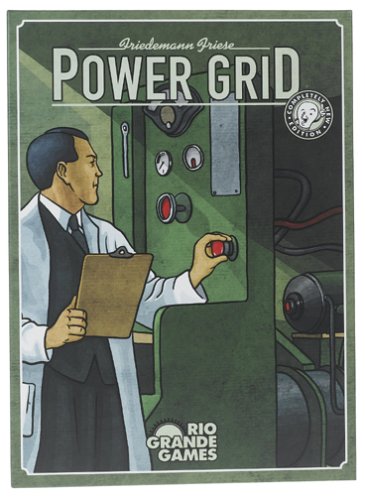

For our more recent game, we went with Germany, which tends to play a little slower because those massive connection costs are more pervasive throughout the map. The first turn saw the purchase of a few reasonable power plants for the early game; 05 tends to go up for auction first in just about every game we play, and 07 and 08 are useful for pursuing a slightly more aggressive strategy. Then, if it's available to you, it usually behooves you to buy a card in the tens on your second or third turn: I admittedly far overvalue 13, and 11 and 15 are often compelling choices too.


Power Grid's biggest (arguably only) source of variance is which power plants come off a random stack, but there are a couple of balancing mechanisms that ensure the market won't become flooded with early-game plants late in the game (where they are no longer useful) or vice-versa (where you'd love to have them but can't afford them yet). In general, it works great: there are only a couple games of Power Grid I remember playing where a complete mismatch between the board state and the power plant market state persisted for longer than a fraction of a turn.
Then this happened.

One of the "balancing mechanisms" is that once any player has built n settlements, power plants of base cost n or lower are removed from the game immediately. For reference, the eight power plants on display at the beginning of the game are always 03-10, and the first to flip off the deck is always 13. So in this awkward configuration, we had already purchased 05, 07-10, and 13, corresponding to exactly one turn with six people buying one power plant. But nobody had yet built three or more settlements, indicating we were very early in the game.
Power plant 30, on the other hand, is a decidedly end-game plant. It has the potential to provide a lot of power at a relatively small resource cost late in the game, and I've seen it as a cornerstone of quite a few winning strategies. The only problem with 30 in the early game is that it's a massive strain on anyone's cash flow: even if you can afford it, buying it likely means you can't buy the resources necessary to use it that turn, let alone expand your network to take advantage of your new capacity.
So it left us with an interesting decision: is 30 worth buying on turn 2? You're acknowledging that it's going to cripple you for at least a turn (probably two), but with the expectations that 1) nobody is likely to contest you buying it, so you'll get it at- or near-cost, and 2) you will never have to replace it for the entirety of the game. In other words, what's the opportunity cost of punting an early-game turn or two compared with the cost of a late-game scramble to buy an adequately big plant?
Ashley decided to go in on 30, indeed buying it near-cost at 32, which made the most sense for her of anyone at the table. She had my beloved 13, meaning that she was guaranteed to power one city without the need to buy resources. So she could simply bide her time until she could afford three trash (which piled up awfully quickly in a six-person game), settle a few more cities, and fire it up. She didn't quite ride her strategy to victory, but it was an interesting strategic move that I'd never seen before, and it was a fun puzzle to think through.
Another, mostly unrelated, odd part of the game was the win condition. In a six-player game of Power Grid, the game ends on the turn where someone has built their fourteenth settlement, and whoever powers the most that turn wins. Usually, only one or two people reach the win condition, and maybe it comes down to a resource battle or a tiebreaker between them. In our game, Zach, Tom, and I all built to fifteen settlements, and we all powered all fifteen. The game was decided on a tiebreaker, in which Tom beat Zach by about ten Elektro, and Zach finished ahead of me by eight.
Has anyone else experienced a game of Power Grid where the game state was so out of sync with the power plant market? Did it spur any unusual strategy, and did that unusual strategy work?
Friday, January 11, 2013
Game Ratings: Measuring Quality in Gaming (Part II)
As a quick review of Part I, I went over five of the seven criteria I use to evaluate board games. This is a scale with a maximum score of five broken down by the following categories:
Originality (0 - 1 pt) - How exciting is the unique combination of ideas that bring this game off the shelf? Does it stand out from similar games?
Theme (0 - 0.5 pt) - Do the thematic elements blend into the game play? Is the theme fitting? Does it increase my interest in playing or is it a last minute addition?
Pure Fun (0 - 1 pt) - Do I enjoy the game? Is it a go to game when I have the necessary player count? Does the game play move along or does it often move too slow?
"Re-play-ability" (0 - 1 pt) - Do I feel the need to revisit it in order to try new options and strategies? Is it predictable? Do I want to play again immediately?
Strategy to Luck Ratio (0 - 0.5 pt) - Does the game present itself well as far as the impact of strategy vs. luck? Is the amount of "luck" adequate for the game length?
Now the final two categories:
 Player Scaling (Up to 0.5 pt)
When I'm looking to acquire a new game one of the first items I look at is the intended number of players. 2-4 is limiting when you've game nights of five or six people.
Player Scaling (Up to 0.5 pt)
When I'm looking to acquire a new game one of the first items I look at is the intended number of players. 2-4 is limiting when you've game nights of five or six people.
There are fun party games that are 4-8+ but they really mean 7+ for an ideal experience. Games that have 2-6 or 3-5 often really need the upper end of the range to put all the player actions or roles into play or the lower end of the spectrum as additional players largely only add time with little to no additional player interaction.
This is a measure of how viable it is to get to the table, a larger "optimal" player range, the better the game under this rating. Two player games do get a pass here unless they are functionally broken. There are no bonus points but I do enjoy when games have different pacing or alternate strategies emerge as more viable with different player counts with the same game. Tongiaki is almost a completely different game when played with two players versus six players.
0.5 - Small World, Wits & Wagers, Coloretto
0.25 - Around the World in 80 Days, Scotland Yard
0.0 - Blokus, Citadels
Parity (Up to 0.5 pt)
 This final category is mostly about ensuring there is tension in a game. As I've mentioned in a previous article about final scoring, it is often the final controllable factor of whether the designed experience was enjoyable or not. Scoring shouldn't have a runaway leader problem nor should it transmit to a beginner that twenty minutes in that they are in for the long haul with no shot at the podium.
I have no qualms with defeat normally but if the session commonly turns into "I gotta catch Bill as he rolled three sixes to start" for an hour I have an issue.
Games that have an all or nothing achievement, such as conquering the globe in Risk or bankrupting everyone else in Monopoly, can leave players slightly jaded at the end as one person comes out with a glorious victory while at least several others were more witnesses or victims than participants . This is a negative in my book as it doesn't leave others with a sense of "what if?" that motivates them the next time, a thought of "I see I could have done this for four more points and that for three more that may have been the difference."
0.5 - Transamerica, In the Year of the Dragon, End of the Triumvirate
0.25 - Kahuna, Jambo, Rosenkonig
0.0 - Risk, Jenga, Monopoly
Games Rated
Now the criticisms are fair; I don't exactly follow the standard BGG.com "recommended rating" method and on rare occasions I've received messages that respectfully disagree with my personal rating system, but it does have its own argument to make. Lets look at several examples:
 La Citta
Originality (1.0/1.0) - Great blend of mechanics
Theme (0.5/0.5) - Region-building at its best
Pure Fun (1.0/1.0) - Controlling a "mega-city" feels powerful
"Re-play-ability" (1.0/1.0) - Many interesting decisions
Strategy/Luck Ratio (0.5/0.5) - Randomness can be mitigated
Player Scaling (0.5/0.5) - 2-player is fine, Excellent with 3-5
Parity (0.5/0.5) - Runaway victories do occur, but rarely
Overall 5.0/5.0 = 10 out of 10
BGG Recommended Rating:
10 - Outstanding. Always want to play and expect this will never change.
My Rating:
This is of course very fitting as one of my few perfect tens. It holds a special position on the shelf.
 Power Grid
Originality (0.75/1.0) - Mechanics mesh well, little innovation
Theme (0.5/0.5) - Plays like I'm supplying energy to cities
Pure Fun (0.75/1.0) - Decisions can get bogged down at times
"Re-play-ability" (0.5/1.0) - Game length a hindrance
Strategy/Luck Ratio (0.5/0.5) - Strategy is strongly rewarded
Player Scaling (0.5/0.5) - Neat intricacies between player counts
Parity (0.5/0.5) - Feels close throughout, strong catch-up mechanic
My Rating:
Overall 4.0/5.0 = 8 out of 10
BGG Recommended Rating:
8 - "Very Good Game. I like to play. Probably I'll suggest it and will never turn down a game."
While Power Grid is a very good game, I'd certainly turn it down if two good shorter games were an alternative. I enjoy playing but there are many games I'd suggest over it, some being rated lower than Power Grid but play much faster.
 Ticket to Ride
Originality (0.75/1.0) - Love the mechanics, but very simple
Theme (0.5/0.5) - Solid theme
Pure Fun (0.75/1.0) - Very enjoyable game for its length
"Re-play-ability" (0.5/1.0) - Initial intrigue is short lived
Strategy/Luck Ratio (0.5/0.5) - Great strategy/luck mix
Player Scaling (0.25/0.5) - Race with 2 and logjam with 5
Parity (0.25/0.5) - One player can go unchecked too often
My Rating:
Overall 3.5/5.0 = 7 out of 10
BGG Recommended Rating:
7 - "Good game, usually willing to play."
I would say my feelings about Ticket to Ride match the BGG recommended rating. It is a good game and I'd usually be willing to play, it does need some variety periodically to keep it from getting stale.
 Blokus
Originality (0.75/1.0) - Not much like it
Theme (0.0/0.5) - Abstract. Fun, but still an abstract.
Pure Fun (0.5/1.0) - My enthusiasm is weakening
"Re-play-ability" (0.5/1.0) - Little variety between games
Strategy/Luck Ratio (0.5/0.5) - Perfect information
Player Scaling (0.0/0.5) - Purely designed for 4
Parity (0.25/0.5) - If everyone comes your way- you're done
My Rating:
Overall 2.5/5.0 = 5 out of 10
BGG Recommended Rating:
5 - "Average game, slightly boring, take it or leave it."
I probably feel a little more fervor about Blokus than one may think from this rating but that is because it suffers in getting to the table. With 4 players being optimal player count, it brings a competitive field of games for 4 players that have more depth and intrigue. It loses out as an abstract, but overall I probably enjoy this game at about a 5.5 or 6.0 level.
 Saint Petersburg
Originality (0.5/1.0) - Ahead of its time, similar games are superior
Theme (0.0/0.5) - I just don't feel it, could have been any theme
Pure Fun (0.25/1.0) - Theme probably carries over here, feels stale
Replayability (0.25/1.0) - Repetitive and cumbersome
Strategy/Luck Ratio (0.25/0.5) - Interesting decisions rarely show
Scalability (0.5/0.5) - Works nicely with 2, 3 & 4 Players
Parity (0.0/0.5) - Arguable, but I see too many blowouts
Overall 1.75/5.0 = 3.5 out of 10
BGG Recommended Rating:
Somewhere between:
3 - "Likely won't play this again although could be convinced. Bad." and
4 - "Not so good, it doesn't get me but could be talked into it on occasion."
I fall right between these two descriptions as it has never been a game I've particularly enjoyed and if given nearly any other option I'd probably elect it over this. I should clarify, this is not a bad game at all though, very functional and sound design for what it is intended to do, it just doesn't captivate my interests.
 Imperial
Originality (1.0/1.0) - A true pioneer in many ways
Theme (0.5/0.5) - I'll give it the benefit of the doubt
Pure Fun (0.75/1.0) - The fun value has decreased
"Re-play-ability" (0.75/1.0) - The excitement has faded
Strategy/Luck Ratio (0.5/0.5) - No luck
Player Scaling (0.5/0.5) - An interesting experience with each player count
Parity (0.5/0.5) - With plenty of common property, its hard to break free
Overall 4.5/5.0 = 9 out of 10
BGG Recommended Rating:
9 - "Excellent game. Always want to play it."
As I mentioned briefly in the intro, I've recently come to terms with a loss of affection for Imperial. It has served its purpose masterfully, but I no longer reach for it at each gaming opportunity. Underneath the investment wargame fasade exists an investment game that uses war to determine the market valuations. Imperial isn't enough of an investment game for the time it takes to play it, and the military actions literally go around in a circle and have begun to feel like a chore. I hope to get Imperial back to the table several times this year and re-evaluate, but for now it is trending downward.
Now in hindsight it seems kind of silly to write two articles over lowering a game rating by 10%, but I'm done and I need to go start my taxes now. Thanks for reading.
Originality (0 - 1 pt) - How exciting is the unique combination of ideas that bring this game off the shelf? Does it stand out from similar games?
Theme (0 - 0.5 pt) - Do the thematic elements blend into the game play? Is the theme fitting? Does it increase my interest in playing or is it a last minute addition?
Pure Fun (0 - 1 pt) - Do I enjoy the game? Is it a go to game when I have the necessary player count? Does the game play move along or does it often move too slow?
"Re-play-ability" (0 - 1 pt) - Do I feel the need to revisit it in order to try new options and strategies? Is it predictable? Do I want to play again immediately?
Strategy to Luck Ratio (0 - 0.5 pt) - Does the game present itself well as far as the impact of strategy vs. luck? Is the amount of "luck" adequate for the game length?
Now the final two categories:
Player Scaling (Up to 0.5 pt)There are fun party games that are 4-8+ but they really mean 7+ for an ideal experience. Games that have 2-6 or 3-5 often really need the upper end of the range to put all the player actions or roles into play or the lower end of the spectrum as additional players largely only add time with little to no additional player interaction.
This is a measure of how viable it is to get to the table, a larger "optimal" player range, the better the game under this rating. Two player games do get a pass here unless they are functionally broken. There are no bonus points but I do enjoy when games have different pacing or alternate strategies emerge as more viable with different player counts with the same game. Tongiaki is almost a completely different game when played with two players versus six players.
0.5 - Small World, Wits & Wagers, Coloretto
0.25 - Around the World in 80 Days, Scotland Yard
0.0 - Blokus, Citadels
Parity (Up to 0.5 pt)
I have no qualms with defeat normally but if the session commonly turns into "I gotta catch Bill as he rolled three sixes to start" for an hour I have an issue.
Games that have an all or nothing achievement, such as conquering the globe in Risk or bankrupting everyone else in Monopoly, can leave players slightly jaded at the end as one person comes out with a glorious victory while at least several others were more witnesses or victims than participants . This is a negative in my book as it doesn't leave others with a sense of "what if?" that motivates them the next time, a thought of "I see I could have done this for four more points and that for three more that may have been the difference."
0.5 - Transamerica, In the Year of the Dragon, End of the Triumvirate
0.25 - Kahuna, Jambo, Rosenkonig
0.0 - Risk, Jenga, Monopoly
 |
| My BGG ratings distribution |
Originality (1.0/1.0) - Great blend of mechanics
Theme (0.5/0.5) - Region-building at its best
Pure Fun (1.0/1.0) - Controlling a "mega-city" feels powerful
"Re-play-ability" (1.0/1.0) - Many interesting decisions
Strategy/Luck Ratio (0.5/0.5) - Randomness can be mitigated
Player Scaling (0.5/0.5) - 2-player is fine, Excellent with 3-5
Parity (0.5/0.5) - Runaway victories do occur, but rarely
Overall 5.0/5.0 = 10 out of 10
BGG Recommended Rating:
10 - Outstanding. Always want to play and expect this will never change.
My Rating:
This is of course very fitting as one of my few perfect tens. It holds a special position on the shelf.
Originality (0.75/1.0) - Mechanics mesh well, little innovation
Theme (0.5/0.5) - Plays like I'm supplying energy to cities
Pure Fun (0.75/1.0) - Decisions can get bogged down at times
"Re-play-ability" (0.5/1.0) - Game length a hindrance
Strategy/Luck Ratio (0.5/0.5) - Strategy is strongly rewarded
Player Scaling (0.5/0.5) - Neat intricacies between player counts
Parity (0.5/0.5) - Feels close throughout, strong catch-up mechanic
My Rating:
Overall 4.0/5.0 = 8 out of 10
BGG Recommended Rating:
8 - "Very Good Game. I like to play. Probably I'll suggest it and will never turn down a game."
While Power Grid is a very good game, I'd certainly turn it down if two good shorter games were an alternative. I enjoy playing but there are many games I'd suggest over it, some being rated lower than Power Grid but play much faster.
Originality (0.75/1.0) - Love the mechanics, but very simple
Theme (0.5/0.5) - Solid theme
Pure Fun (0.75/1.0) - Very enjoyable game for its length
"Re-play-ability" (0.5/1.0) - Initial intrigue is short lived
Strategy/Luck Ratio (0.5/0.5) - Great strategy/luck mix
Player Scaling (0.25/0.5) - Race with 2 and logjam with 5
Parity (0.25/0.5) - One player can go unchecked too often
My Rating:
Overall 3.5/5.0 = 7 out of 10
BGG Recommended Rating:
7 - "Good game, usually willing to play."
I would say my feelings about Ticket to Ride match the BGG recommended rating. It is a good game and I'd usually be willing to play, it does need some variety periodically to keep it from getting stale.
Originality (0.75/1.0) - Not much like it
Theme (0.0/0.5) - Abstract. Fun, but still an abstract.
Pure Fun (0.5/1.0) - My enthusiasm is weakening
"Re-play-ability" (0.5/1.0) - Little variety between games
Strategy/Luck Ratio (0.5/0.5) - Perfect information
Player Scaling (0.0/0.5) - Purely designed for 4
Parity (0.25/0.5) - If everyone comes your way- you're done
Overall 2.5/5.0 = 5 out of 10
BGG Recommended Rating:
5 - "Average game, slightly boring, take it or leave it."
I probably feel a little more fervor about Blokus than one may think from this rating but that is because it suffers in getting to the table. With 4 players being optimal player count, it brings a competitive field of games for 4 players that have more depth and intrigue. It loses out as an abstract, but overall I probably enjoy this game at about a 5.5 or 6.0 level.

Originality (0.5/1.0) - Ahead of its time, similar games are superior
Theme (0.0/0.5) - I just don't feel it, could have been any theme
Pure Fun (0.25/1.0) - Theme probably carries over here, feels stale
Replayability (0.25/1.0) - Repetitive and cumbersome
Strategy/Luck Ratio (0.25/0.5) - Interesting decisions rarely show
Scalability (0.5/0.5) - Works nicely with 2, 3 & 4 Players
Parity (0.0/0.5) - Arguable, but I see too many blowouts
Overall 1.75/5.0 = 3.5 out of 10
BGG Recommended Rating:
Somewhere between:
3 - "Likely won't play this again although could be convinced. Bad." and
4 - "Not so good, it doesn't get me but could be talked into it on occasion."
I fall right between these two descriptions as it has never been a game I've particularly enjoyed and if given nearly any other option I'd probably elect it over this. I should clarify, this is not a bad game at all though, very functional and sound design for what it is intended to do, it just doesn't captivate my interests.
Conclusion
Originality (1.0/1.0) - A true pioneer in many ways
Theme (0.5/0.5) - I'll give it the benefit of the doubt
Pure Fun (0.75/1.0) - The fun value has decreased
"Re-play-ability" (0.75/1.0) - The excitement has faded
Strategy/Luck Ratio (0.5/0.5) - No luck
Player Scaling (0.5/0.5) - An interesting experience with each player count
Parity (0.5/0.5) - With plenty of common property, its hard to break free
Overall 4.5/5.0 = 9 out of 10
BGG Recommended Rating:
9 - "Excellent game. Always want to play it."
As I mentioned briefly in the intro, I've recently come to terms with a loss of affection for Imperial. It has served its purpose masterfully, but I no longer reach for it at each gaming opportunity. Underneath the investment wargame fasade exists an investment game that uses war to determine the market valuations. Imperial isn't enough of an investment game for the time it takes to play it, and the military actions literally go around in a circle and have begun to feel like a chore. I hope to get Imperial back to the table several times this year and re-evaluate, but for now it is trending downward.
Now in hindsight it seems kind of silly to write two articles over lowering a game rating by 10%, but I'm done and I need to go start my taxes now. Thanks for reading.
Monday, January 7, 2013
Game Ratings: Measuring Quality in Gaming (Part I)

During my latest re-evaluation I realized I've gone 6 months without giving a thorough explanation of games I enjoy. How can I expect others to follow my thoughts if I keep my game evaluations to myself?
Now before I get into my rating scale (which may elicit plenty of fair criticism), let me explain my criteria in order to rate a game.
1. I play every game at least 3 times before rating it.
2. I decline the opportunity to rate a game if I still don't feel I have a grasp of the depth of the game, no matter how many times I've played it. A great example is Go, for which I have played maybe six full games and always feel I'm probably unqualified to play.
3. I do not rate games who are ambiguous to grade - I'd give the concept of Poker at least a 9.5/10 but there are so many variations I could never come to a consensus on a rating for the BGG page "Poker". I also play Warhammer 40k, but that is a game for which the experience is almost entirely determined based on opponent, terrain, painting/modelling, etc, certainly difficult to quantify with a single number.
4. I do rate games for which I have only played a virtual version implementation. I only do so if the implementation demonstrated great quality and encompassed the "spirit" of the game.
5. I do not rate card games played with an ordinary deck of cards. They are almost endless and I try to reserve my ratings for the evaluation of the hard work and creativity that went into the intellectual property on the market. This may sound a bit sanctimonious but I promise I don't intend for it to be.
Originality (Up to 1.0 pt)

Sample Ratings:
1.0 - Samurai, Dominion, Roborally
0.5 - Modern Art
0.0 - Cube Checkers

Theme is a bit easier to judge; a game usually either has a fitting theme or it doesn't. I do give partial credit for trying, and so even if a theme isn't ideal I will give a quarter point if it improves enjoyment beyond just an abstract.
Sample Ratings:
0.5 - Spy Alley, Mr. Jack, Streetsoccer
0.25 - Tally Ho, Cleopatra & the Society of Architects
0.0 - Mancala, Liar's Dice
Pure Fun (Up to 1.0 pt)

Sample Ratings:
1.0 - Lost Cities, Carcassonne the Castle
0.75 - Hungry Hungry Hippos, Ticket to Ride
0.25 - Ra, En Garde
"Re-play-ability" (Up to 1.0 pt)
I don't believe this is a word but it does have expressive value until we find a suitable replacement. Its hard to imagine a game being fun but not "re-playable" in a sense that it isn't worth playing over and over. What I am identifying is are there multiple strategies that make a game worth playing specifically to try to achieve and is there enough player driven chaos to warrant a different game experience. Modular boards and card variety give points as do optional inclusions and alternate rule sets.

1.0 - Can't Stop, Vegas Showdown, Ingenious
0.5 - Jambo, Blokus, Ponte del Diavolo
0.0 - Shut the box
Strategy to Luck Ratio (Up to 0.5 pt)
The purpose of this category is to help value how well a game measures up to its intended quantity of luck and impact of strategic decisions. I'm certainly not alone in my disdain for three hour games whose outcome is largely impacted by luck. My intention is to differentiate games whose style seems to indicate they are comprised of significant strategy when they are actually closer to a lottery drawing each time they are played.

Now this is hardly a deal-breaker for a game with a length of 15 to 20 minutes, but it does demonstrate how sometimes games can appear to be vastly more strategic than how they often play out. It's not a negative for a game like Yahtzee to be very luck driven as the initial impression is congruent with that idea. Games get this the full points in this category by default unless they prove otherwise by not giving adequate ability to mitigate luck.
0.5 - Diamant, Backgammon, Scrabble
0.25 - Simply Suspects, Uno
0.0 - Pokemon TCG, The Royal Game of Ur
I've broken this post into two parts as it has become lengthier than expected. In Part II I will discuss the final two criteria in my process for evaluating board games and delve into some criticisms of this particular grading scale. In the meantime, what do you think? Can games be graded based on preset guidelines or is the purpose lost when many judgments are subjectively swayed anyway?
Thursday, January 3, 2013
Old Games Revisited: January 2013
When we published our review and discussion of Kingdom Builder, one of our readers gave a great suggestion: in addition to our first-impression style review, it might be interesting to go back and write a more detailed review later on, incorporating more discussion of strategy and how our opinions of the game have changed over time. Discussing strategy and particular optimization decisions is coming; it's on my list of resolutions for the new year. But the idea of revisiting old games to see how well they've held up or how our approach to them has changed is especially intriguing, since a particular game could lose its luster after playing it only a few times, or the strategic implications of a game might only become clear after running through it once or twice.
Kingdom Builder
 Kingdom Builder has been a frequent installation in our all-too-seldom game nights thanks to its straightforward mechanics and reasonably fast play. The analysis paralysis I mentioned in the initial review has abated a bit as we've gotten more familiar with the rules, which has made Kingdom Builder quicker and more fun. We're still getting new combinations of map tiles and scoring objectives--in fact, in our most recent game, we drew the "Citizens" objective for the first time ever--so the game continues to feel fresh. Most importantly, we haven't played with the disastrous combination of Paddock and Hermits again, but we have played with both Paddock and Hermits alone, and the game worked just fine.
Verdict: Kingdom Builder is still good. Now that the rules are more familiar to us, and now that we've identified the rare combinations of mechanics that break the game, it's actually getting better. Almost as importantly, Kingdom Builder is short enough that we can play it multiple times in the same night and engaging enough that we actually want to.
Small World
 My co-author Alex first introduced me to this fantasy-themed territory-control game, and I played it again for the first time in a couple of years when we got together over the Christmas holidays. Like Kingdom Builder, Small World features enough mechanical combinations that each game feels different from the last, which is emerging as a pattern for making games continue to shine far past their purchase date. Another similarity to Kingdom Builder is that some of these combinations are far more powerful than others, but such game-breaking scenarios seem rare.
Verdict: I still enjoy Small World also, but it's clear to me that it would require several, perhaps dozens of, play-throughs before you could develop anything approaching an optimal strategy. That, combined with Small World's inherent low variance, could make this another game that's worth coming back to. I'd love to try Small World in its iPad incarnation; like Ticket to Ride, this game has to be more fun when the computer takes care of the constant but unexciting numerical computation for you.
Tongiaki
 Another one I first played with Alex, Tongiaki is a constant fixture in our game days due to its low-pressure environment and hilariously, constantly shifting alliances. We've played this one enough that we have developed some ostensibly optimal strategies: some of us like the "build up your forces on a single island" approach while others go with "explore outward as much as possible," and above everything else, "keep 5-point islands to yourself at all costs." Of course, like finches in the Galapagos with no external pressure, we've converged onto the same strategy without knowing how anybody else does it, and it would be fascinating to play Tongiaki with a new player just to see what new strategies emerge.
Verdict: we're not playing Tongiaki for the deeply complex tactical experience; as far as I can tell, we've exhausted all the possible strategies at this point, and we know that winning it is as much a function of variance as of good gameplay. Instead, the reason we keep coming back to it is that it's fun to make your friends' boats sink, and it's a refreshing "palate-cleanser" between more demanding games.
Blokus
 More of a visual puzzle game than a strategy board game, I've played Blokus with a few different groups but most recently with my parents. It's worth playing mostly because it tests a completely different set of skills than the intensely mathematical strategy contained in most of the Euro games in our arsenal. The real strategy behind the small 1x1 square piece is starting to become clear (use it to escape jams in enemy territory!). Also becoming clear is the game's biggest limitation: despite the rules workarounds for two- and three-player games, it really does need four players to work correctly.
Verdict: Blokus is a game that is probably going to appeal to an entirely different set of people than the "heavy" Euro games will, and it's a bit unusual in that it doesn't neatly fit into the strictures of "Euro" or "American die-roller" or "party". Play this one if you're into visual-spatial puzzlers. Don't play it if you don't have exactly four people.
Kingdom Builder

Verdict: Kingdom Builder is still good. Now that the rules are more familiar to us, and now that we've identified the rare combinations of mechanics that break the game, it's actually getting better. Almost as importantly, Kingdom Builder is short enough that we can play it multiple times in the same night and engaging enough that we actually want to.
Small World

Verdict: I still enjoy Small World also, but it's clear to me that it would require several, perhaps dozens of, play-throughs before you could develop anything approaching an optimal strategy. That, combined with Small World's inherent low variance, could make this another game that's worth coming back to. I'd love to try Small World in its iPad incarnation; like Ticket to Ride, this game has to be more fun when the computer takes care of the constant but unexciting numerical computation for you.
Tongiaki

Verdict: we're not playing Tongiaki for the deeply complex tactical experience; as far as I can tell, we've exhausted all the possible strategies at this point, and we know that winning it is as much a function of variance as of good gameplay. Instead, the reason we keep coming back to it is that it's fun to make your friends' boats sink, and it's a refreshing "palate-cleanser" between more demanding games.
Blokus

Verdict: Blokus is a game that is probably going to appeal to an entirely different set of people than the "heavy" Euro games will, and it's a bit unusual in that it doesn't neatly fit into the strictures of "Euro" or "American die-roller" or "party". Play this one if you're into visual-spatial puzzlers. Don't play it if you don't have exactly four people.
Wednesday, January 2, 2013
Fresh Themes for the New Year
 |
| Link to game on Boardgamegeek.com |
I've got a bit of an annual routine during the holidays, I like to clean things up in preparation for the upcoming year.
I've been revising my collection over the past year, looking to sell or trade away a few of the games I feel less and less compelled to bring out and looking to eliminate some redundancy in the collection. Of course this is all short lived and I've been spending some of the last few months already looking for suitable replacements.
Theme is often a make or break aspect of a new game on the market for me. I pass over Mediterranean merchants, Middle Ages worker placements, Abstract construction titles and Nineteenth Century Train games all the while knowing I'm missing out on some great gaming, but unable to persuade myself and others to give them a try. Lets take a look at a few themes in particular that have caught my eye recently.
The Great Fire of London
Synopsis:
Fresh off a successful reprint Kickstarter campaign, The Great Fire of London appears to have gained a whole new audience just in time for 2013. Players control buildings and battle to control the flames from swallowing their property while innocently steering it toward the their opponents.
Why do I LOVE this theme?
Fire is a natural villain and while it isn't quite an untapped theme, it does allow for interesting options with thematic mechanics. I particularly enjoy the historical element of this as it blends history with the feelings of tragedy as your stomach drops when your key stronghold turns into ashes.
 |
| Link to game on Boardgamegeek.com |
Synopsis:
Functioning as low level criminals, players slowly increase their notoriety by taking down increasingly tougher challenges alone until they reach a point in which they have to trust one another in order succeed.
Why do I LIKE this theme?
While also sounding like a movie theme, I love games that have some negotiation element to them, but who aren't entirely dedicated to it. What better way to evoke charismatic negotiations among backstabbing players than with a guild of thieves?
 |
| Link to game on Boardgamegeek.com |
Synopsis:
Due out in 2013, Salmon Run is a race up stream for players as they play special abilities and avoid obstacles on the way to their breeding grounds.
Why do I LOVE this theme?
Why not? I like a good racing game every now and then and at least this one has a great purpose. I think the modular boards is always a neat aspect for replay value and it looks like a neat gateway game.
 |
| Link to game on Boardgamegeek.com |
Synopsis:
Players fight an epidemic by adding on to their hospital in order to keep up with the incoming patients. Players bid on hospital add-ons in an attempt to best
Why do I LIKE this theme?
The idea of improving infrastructure of a hospital in order to keep up with demand is appealing to me. As a tile laying game it could be great or fall flat with me but the theme definitely would get me in the door for a play to see how infectious the game really is.
 |
| Link to game on Boardgamegeek.com |
Synopsis:
Players juggle the role of an entrepreneur by jumping into a start up company and attempting to hire the best personnel from opponents. Players hire engineers to improve the product, salespeople to sell the product and executives to improve productivity.
Why do I LOVE this theme?
As an aspiring entrepreneur I really enjoy the idea of pursuing a scarce pool of talent and battling with opponents to keep them on board. As employees stay their costs increase as they become vested in the company. I think its a great business concept to develop and I hope the gameplay lives up to it.
Thirteen Gaming Resolutions for 2013
Happy 2013 from Ludi Berkeley! To ring in the new year, and to celebrate the start of the Ludi Berkeley's full year, here are thirteen gaming resolutions I'll try to follow in 2013.
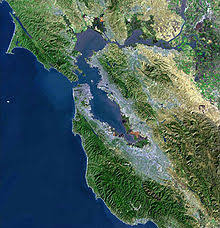 1. Host and attend more game nights. I'm in an engineering graduate program in the San Francisco Bay area. It's likely that at no time in my life will I be in such a board-game friendly situation, and I've done a less good job taking advantage of that in 2012 than I did in 2011. There is no reason that my apartment shouldn't be packed to the walls with board gaming at least once per month.

2. Expand my collection. It's always the goal of any board gamer--or video gamer, movie buff, or avid reader--but in 2012, the only new additions to my collection were Pandemic: On the Brink and Kingdom Builder. The grad student stipend isn't one of fantastic wealth, but neither is it a shackle to poverty, and acquiring three or four new games in the new year seems reasonable. I already have my eye on Seasons, which is beautifully designed, has similar mechanics to 7 Wonders and Ascension, and has been recognized as the best new game of 2012.

3. Play the Spiel des Jahres winners and nominees. Either the Spiel des Jahres overall winner (Kingdom Builder in 2012, Dominion in 2009, and so on) and/or the Kennerspiel des Jahres ("Enthusiast Game of the Year"; 7 Wonders in 2011, Agricola in 2008, and so on) tends to be very, very good and a lasting fixture in board game years after its award. I'm making a point of getting in on the ground floor with both the Spiel des Jahres and the Kennerspiel des Jahres, and the more of the nominees I can also play, the better.
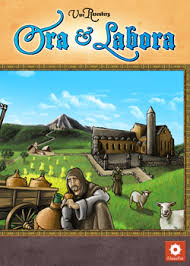
4. Tackle more of the BoardGameGeek top 20. Despite the changing tastes of gamers and the weekly entries of new games, the top 20 games on BoardGameGeek remain surprisingly constant from year to year. I've played Agricola, Power Grid, Dominion (and its expansion Intrigue), 7 Wonders, and Race for the Galaxy, and I was able to add Puerto Rico this year. Some of the games on there are expensive (Eclipse at $99 MSRP) or don't look like my cup of tea (Twilight Struggle, a two-player war game). But they're all at the top of their game (so to speak) for a reason. At the top of my list among these games include Le Havre, Caylus, and Ora et Labora.
 5. Be less scared of very long games. Agricola isn't my favorite board game out there, but that has as much to to with its length as its unforgiving mechanics. Power Grid is without a doubt one of my five favorite board games. I end
up enjoying every minute of it every time I play, but all too often I
veto it because it takes too long. And I adore the immersive aesthetic and beautiful artwork in La Citta, but all too often I let it get vetoed because it takes too long. It's time to dust off these evening-killers and accept that we're only going to get one game in.
5. Be less scared of very long games. Agricola isn't my favorite board game out there, but that has as much to to with its length as its unforgiving mechanics. Power Grid is without a doubt one of my five favorite board games. I end
up enjoying every minute of it every time I play, but all too often I
veto it because it takes too long. And I adore the immersive aesthetic and beautiful artwork in La Citta, but all too often I let it get vetoed because it takes too long. It's time to dust off these evening-killers and accept that we're only going to get one game in.
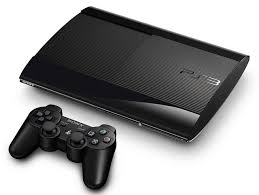 6. Get around to playing video games I purchased in 2012 (or longer ago). I'm not as huge a video gamer as I was in middle or high school, but I own a Playstation 3 and a PC well-suited to playing video games, plus plenty of games to play on both. I started but didn't finish Skyrim's Dawnguard expansion (and haven't scratched Dragonborn yet). I loved Mass Effect 1 and 2 but haven't even installed 3 yet despite having pre-ordered it back in the spring. And that used copy of Bioshock I picked up along with my PS3 has been sitting patiently on the shelf for more than two years now.
 7. Delve deeper into low-leverage indie gaming. Heartfelt storytelling, innovative gameplay, fantastic aesthetics, and a focus on experience rather than difficulty are a set of ideals very much in vogue in independent game design these days--and a set of ideals that very much appeals to me. I've been unfortunately out of the loop playing this sort of game for the past several years, and I want to get back into it. In particular, I'm interested in getting hooked on a point-and-click adventure game, King's Quest or Monkey Island style.
 8. Play at least one game of 1000 Blank White Cards. Essentially do-it-yourself Fluxx, 1kBWC is the ultimate in creative party gaming. Artists have a chance to create pretty pictures, comedians and raconteurs can entertain and engage, and us gaming geeks can play around with clever mechanics and rules interactions. I've loved the game since high school and have played it scant few times since college.
 9. Play-test D&D Next. Here's a chance to do something exactly in my wheelhouse: delve into the underlying design decisions behind the next iteration of the greatest and most popular tabletop RPG out there. I've followed the open beta since its beginning back in May but, despite my best efforts to organize a group, haven't been able to actually sit down and play it. 2013 might give me a better chance, as the next season of Encounters includes the D&D Next beta among its optional rules.
 10. Play a D&D Lair Assault. The name "Lair Assault" has always put me off: it implies that it's going to be a session of combat and nothing else, within a version of D&D that's soundly criticized (sometimes fairly) as focusing too much on combat. However, all of my D&D-playing friends who have done Lair Assaults have reported having a great time, and with 4th Edition starting to make its exit, now is as good time as any to give one a shot.
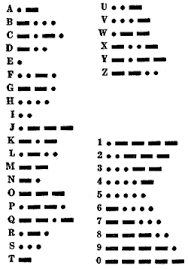 11. Attend more puzzlehunts. September and October gave me the chance to play through two, one hosted by my friends in real life, another hosted by Ken Jennings and the Smithsonian online. I had an incredibly fun time with both, and I'm excited to try playing a live-action hunt on a larger scale, like MIT's or Berkeley's.
 12. Blog more about game strategy. One idea I had starting this blog was to relate specific situations and anecdotes from games and pose them to the blog's readers, asking for a wider audience to consider the optimum strategy. (Exactly how much is power plant 13 worth in Power Grid?) Ludi Berkeley has been all too light on that sort of post so far.
13. Redesign the blog. The neutral gray was a placeholder layout I picked back in June when I started the blog, and unfortunately I haven't had time to make it more interesting-looking. Expect an aesthetic explosion in the New Year!
Let me know what your gaming resolutions for 2013 are, and I wish you good luck in fulfilling all of them! I appreciate everyone who's followed along with the blog so far, and I encourage you to follow the blog and spread the word about it if you've enjoyed reading.

2. Expand my collection. It's always the goal of any board gamer--or video gamer, movie buff, or avid reader--but in 2012, the only new additions to my collection were Pandemic: On the Brink and Kingdom Builder. The grad student stipend isn't one of fantastic wealth, but neither is it a shackle to poverty, and acquiring three or four new games in the new year seems reasonable. I already have my eye on Seasons, which is beautifully designed, has similar mechanics to 7 Wonders and Ascension, and has been recognized as the best new game of 2012.
3. Play the Spiel des Jahres winners and nominees. Either the Spiel des Jahres overall winner (Kingdom Builder in 2012, Dominion in 2009, and so on) and/or the Kennerspiel des Jahres ("Enthusiast Game of the Year"; 7 Wonders in 2011, Agricola in 2008, and so on) tends to be very, very good and a lasting fixture in board game years after its award. I'm making a point of getting in on the ground floor with both the Spiel des Jahres and the Kennerspiel des Jahres, and the more of the nominees I can also play, the better.
4. Tackle more of the BoardGameGeek top 20. Despite the changing tastes of gamers and the weekly entries of new games, the top 20 games on BoardGameGeek remain surprisingly constant from year to year. I've played Agricola, Power Grid, Dominion (and its expansion Intrigue), 7 Wonders, and Race for the Galaxy, and I was able to add Puerto Rico this year. Some of the games on there are expensive (Eclipse at $99 MSRP) or don't look like my cup of tea (Twilight Struggle, a two-player war game). But they're all at the top of their game (so to speak) for a reason. At the top of my list among these games include Le Havre, Caylus, and Ora et Labora.
 5. Be less scared of very long games. Agricola isn't my favorite board game out there, but that has as much to to with its length as its unforgiving mechanics. Power Grid is without a doubt one of my five favorite board games. I end
up enjoying every minute of it every time I play, but all too often I
veto it because it takes too long. And I adore the immersive aesthetic and beautiful artwork in La Citta, but all too often I let it get vetoed because it takes too long. It's time to dust off these evening-killers and accept that we're only going to get one game in.
5. Be less scared of very long games. Agricola isn't my favorite board game out there, but that has as much to to with its length as its unforgiving mechanics. Power Grid is without a doubt one of my five favorite board games. I end
up enjoying every minute of it every time I play, but all too often I
veto it because it takes too long. And I adore the immersive aesthetic and beautiful artwork in La Citta, but all too often I let it get vetoed because it takes too long. It's time to dust off these evening-killers and accept that we're only going to get one game in.13. Redesign the blog. The neutral gray was a placeholder layout I picked back in June when I started the blog, and unfortunately I haven't had time to make it more interesting-looking. Expect an aesthetic explosion in the New Year!
Let me know what your gaming resolutions for 2013 are, and I wish you good luck in fulfilling all of them! I appreciate everyone who's followed along with the blog so far, and I encourage you to follow the blog and spread the word about it if you've enjoyed reading.
Subscribe to:
Posts (Atom)