Showing posts with label Spiel des Jahres. Show all posts

Wednesday, January 2, 2013

Thirteen Gaming Resolutions for 2013

Happy 2013 from Ludi Berkeley! To ring in the new year, and to celebrate the start of the Ludi Berkeley's full year, here are thirteen gaming resolutions I'll try to follow in 2013.
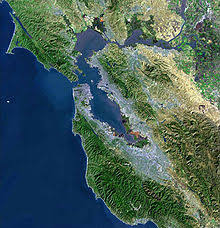
    1. Host and attend more game nights. I'm in an engineering graduate program in the San Francisco Bay area. It's likely that at no time in my life will I be in such a board-game friendly situation, and I've done a less good job taking advantage of that in 2012 than I did in 2011. There is no reason that my apartment shouldn't be packed to the walls with board gaming at least once per month.


    2. Expand my collection. It's always the goal of any board gamer--or video gamer, movie buff, or avid reader--but in 2012, the only new additions to my collection were Pandemic: On the Brink and Kingdom Builder. The grad student stipend isn't one of fantastic wealth, but neither is it a shackle to poverty, and acquiring three or four new games in the new year seems reasonable. I already have my eye on Seasons, which is beautifully designed, has similar mechanics to 7 Wonders and Ascension, and has been recognized as the best new game of 2012.

     

    3. Play the Spiel des Jahres winners and nominees. Either the Spiel des Jahres overall winner (Kingdom Builder in 2012, Dominion in 2009, and so on) and/or the Kennerspiel des Jahres ("Enthusiast Game of the Year"; 7 Wonders in 2011, Agricola in 2008, and so on) tends to be very, very good and a lasting fixture in board game years after its award. I'm making a point of getting in on the ground floor with both the Spiel des Jahres and the Kennerspiel des Jahres, and the more of the nominees I can also play, the better.
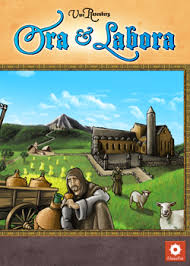
     

    4. Tackle more of the BoardGameGeek top 20. Despite the changing tastes of gamers and the weekly entries of new games, the top 20 games on BoardGameGeek remain surprisingly constant from year to year. I've played Agricola, Power Grid, Dominion (and its expansion Intrigue), 7 Wonders, and Race for the Galaxy, and I was able to add Puerto Rico this year. Some of the games on there are expensive (Eclipse at $99 MSRP) or don't look like my cup of tea (Twilight Struggle, a two-player war game). But they're all at the top of their game (so to speak) for a reason. At the top of my list among these games include Le Havre, Caylus, and Ora et Labora.

    5. Be less scared of very long games. Agricola isn't my favorite board game out there, but that has as much to to with its length as its unforgiving mechanics. Power Grid is without a doubt one of my five favorite board games. I end up enjoying every minute of it every time I play, but all too often I veto it because it takes too long. And I adore the immersive aesthetic and beautiful artwork in La Citta, but all too often I let it get vetoed because it takes too long. It's time to dust off these evening-killers and accept that we're only going to get one game in.

    6. Get around to playing video games I purchased in 2012 (or longer ago). I'm not as huge a video gamer as I was in middle or high school, but I own a Playstation 3 and a PC well-suited to playing video games, plus plenty of games to play on both. I started but didn't finish Skyrim's Dawnguard expansion (and haven't scratched Dragonborn yet). I loved Mass Effect 1 and 2 but haven't even installed 3 yet despite having pre-ordered it back in the spring. And that used copy of Bioshock I picked up along with my PS3 has been sitting patiently on the shelf for more than two years now.

    7. Delve deeper into low-leverage indie gaming. Heartfelt storytelling, innovative gameplay, fantastic aesthetics, and a focus on experience rather than difficulty are a set of ideals very much in vogue in independent game design these days--and a set of ideals that very much appeals to me. I've been unfortunately out of the loop playing this sort of game for the past several years, and I want to get back into it. In particular, I'm interested in getting hooked on a point-and-click adventure game, King's Quest or Monkey Island style.

    8. Play at least one game of 1000 Blank White Cards. Essentially do-it-yourself Fluxx, 1kBWC is the ultimate in creative party gaming. Artists have a chance to create pretty pictures, comedians and raconteurs can entertain and engage, and us gaming geeks can play around with clever mechanics and rules interactions. I've loved the game since high school and have played it scant few times since college.


    9. Play-test D&D Next. Here's a chance to do something exactly in my wheelhouse: delve into the underlying design decisions behind the next iteration of the greatest and most popular tabletop RPG out there. I've followed the open beta since its beginning back in May but, despite my best efforts to organize a group, haven't been able to actually sit down and play it. 2013 might give me a better chance, as the next season of Encounters includes the D&D Next beta among its optional rules.

    10. Play a D&D Lair Assault. The name "Lair Assault" has always put me off: it implies that it's going to be a session of combat and nothing else, within a version of D&D that's soundly criticized (sometimes fairly) as focusing too much on combat. However, all of my D&D-playing friends who have done Lair Assaults have reported having a great time, and with 4th Edition starting to make its exit, now is as good time as any to give one a shot.

    11. Attend more puzzlehunts. September and October gave me the chance to play through two, one hosted by my friends in real life, another hosted by Ken Jennings and the Smithsonian online. I had an incredibly fun time with both, and I'm excited to try playing a live-action hunt on a larger scale, like MIT's or Berkeley's.


    12. Blog more about game strategy. One idea I had starting this blog was to relate specific situations and anecdotes from games and pose them to the blog's readers, asking for a wider audience to consider the optimum strategy. (Exactly how much is power plant 13 worth in Power Grid?) Ludi Berkeley has been all too light on that sort of post so far.


    13. Redesign the blog. The neutral gray was a placeholder layout I picked back in June when I started the blog, and unfortunately I haven't had time to make it more interesting-looking. Expect an aesthetic explosion in the New Year!

    Let me know what your gaming resolutions for 2013 are, and I wish you good luck in fulfilling all of them! I appreciate everyone who's followed along with the blog so far, and I encourage you to follow the blog and spread the word about it if you've enjoyed reading.

    Tuesday, January 1, 2013

    Quick Impressions: Scotland Yard

    Last Sunday, Alex and I had a bit of a reunion with our old college gaming buddies Jeff and Hershel. We played some old favorites (Tongiaki and Small World) and also had the opportunity to try out one that was new (to us), Scotland Yard. It's actually an older game by modern board game standards: having won the 1983 Spiel des Jahres, it's a rare '80s strategy game that endures in popularity today. Released before the Settlers of Catan-led explosion in the popularity of Euro-style games around the turn of the century, Scotland Yard lacks the contemporary Euro-gamey feel of skill/chance balancing and constant player re-balancing and multiple paths to victory but presents a complex and intriguing strategic foundation for three decades of Euro games.

    In Scotland Yard, one player takes on the role of the notorious criminal Mr. X, and the rest of the players play detectives trying to track him down. Scotland Yard is essentially graph theory put into board game form; each player occupies one vertex of a fictionalized street map of London, and if a detective ever occupies the same position as Mr. X, the detectives win as a team. But if Mr. X evades capture for twenty-four turns, he wins. The rules are simple: players move from vertex to vertex via a variety of modes of transit, but each player only has a limited number of "tickets" for each mode. The big catch is that Mr. X shows up only once every three to five turns, with the detectives left to guess where he has gone in the interim.

    From a game design perspective, the most distinctive thing about Scotland Yard is that it's a pure-strategy, practically zero-variance game. The only random element in Scotland Yard is its initial setup, where each detective and Mr. X can start on one of about twenty different spots on the map (there are two hundred in total). Afterwards, there's no chance in the game at all; every move has to take place on an ever-expanding graph of possible moves.

    The strategy quickly becomes for the detectives to fan out and reach Underground stations (which allow the fastest movement across the map) until Mr. X shows himself, then try to cast a tightening net around Mr. X. As a result, the game's difficulty is a direct function of how many players there are. Some of the distribution of turns and tickets is rebalanced for more or fewer players, but in general a game with three players (or two detectives) becomes very easy for Mr. X to win, while a game with six players (five detectives) is a lot tougher.

    We played with three detectives plus Mr. X, and for about seventeen turns, we detectives were thoroughly beaten. When Mr. X revealed himself at turn 18, though, we were able to narrow down his location such that when he made a mistake at turn 19, we had all his possible routes of escape covered and won the game. It was a slightly less-than-fulfilling way to win, taking advantage of an unforced error rather than putting together a brilliant strategy, and but for that ill-advised trip on the Underground, we surely would have lost.

    Scotland Yard is built around one simple mechanic, and it executes that mechanic very well. The complete lack of variance during the game leads to some nice intensity as you pit your strategic skills and bluffs directly against those of your friends. It would be a tough game to play more than once of in a single sitting--partially because it's easy to reach a saturation point with the limited mechanics, and partially because the strategizing actually does get a little mentally taxing. But it plays quickly, and it's easy enough to teach to non-gamers, making it a viable alternative to Puerto Rico for a group you'd normally play Anomia with.

    3-6 players, 30-60 minutes, $40 at a game shop or $28 on Amazon

    January Board Game of the Month: Dixit

    Plenty of Spiel des Jahres winners and nominees are pure-strategy games, the kind that exemplify the Euro-game genre and reward intensely mathematical strategizing. They're awesome games, and they've led to the countless hours of scrutiny and nitpicking that qualifies as fun among a bunch of engineering grad students. Every once in a while, though, the Spiel des Jahres award goes to a game like Dixit that, despite absolutely no math or strategy behind it, is engaging and complicated and worthy of the title of "game of the year".

    Style and Gameplay

    Dixit is a card-collecting game that draws inevitable (and entirely appropriate) comparisons to Apples to Apples. Like Apples to Apples, every player has a hand of cards; on each turn, every player selects one card that fits the turn's theme the best. The mechanics are a bit different from Apples to Apples--instead of the "active player" deciding which card fits best, all the players vote on which one belonged to the "active player". Dixit's greatest improvement over Apples to Apples is a track and  mechanism for scoring, keeping Dixit to a manageable length by having an endgame condition within sight.

    The scoring system also provides some incentive for the "active player" to create clues that are guessable but not immediately obvious. If a clue is too easy or too hard, the "active player" scores no points. The real trick to Dixit is to hit somewhere in the middle: anything from a clever interpretation to an inside joke to a slightly abstract or off-kilter narrative can do the trick.

    Probably the most remarkable part of Dixit is its beautiful artwork, a style somewhere between fairytale storybook and surreal epic fantasy. Different people looking at the same card, or looking at the same card from a different angle or in a different context, can interpret it in vastly different and imaginative ways. The impetus is always on the "active player," rather than a randomly selected "green card," to suggest an interpretation for a card, so there are some cards that don't speak to a player and may go unused the entire game. But the vast majority of them inspire something wonderful: a story, a reference, or even a mere flicker of word-association.

    Analysis and Anecdotes

    Another point of similarity Apples to Apples, the only real way to gain an advantage in Dixit is to know the people you're playing with very well. Upon seeing a card with a picture of a knight riding out of the pages of a book, my dad gave the clue "woeful countenance". Having played in the musical Man of la Mancha together, I immediately understood the reference, but my mom and girlfriend were not so informed. Similarly, I had just been to the mall with my girlfriend, where we saw a carousel; when she gave the clue "a trip to the mall," I knew the carousel card had to be hers.

    Depending on the group of people playing, Dixit could take a number of different turns, ranging from the imaginative to the idiosyncratic, filled with artistic allusions or recounting of hilarious stories from college. It would be easy enough to rig Dixit, to give each picture a phrase specific to it and use the same one every time, but that would be missing the point. And playing through the same deck of cards with the same people multiple times could wear out a lot of the game's novelty: there was a fantastic sense of discovery turning over each card and seeing it for the first time. Asmodee, Dixit's creators, understand that (and have a good business model) and have released a number of expansion decks.

    Dixit does take a bit of getting used to; there's a fine line between "too obvious" and "too obtuse". In our first game, we tended, accidentally, toward "too obvious," but we assumed that if we'd played more games, we would have gotten the hang of making appropriately specific clues. And the game could stand to be a little more interactive--for most of the game, there's very little being said except for when the "active player" reveals which card was his or hers. The first game of Apples to Apples I played was like that too; then we discovered how important and fun it was to advocate for your own card. Presumably, Dixit is even more fun once people become comfortable enough with it to start advocating and arguing with the active player.

    Overall Impressions

    Yes, Dixit is basically "Apples to Apples with pictures". No, that's not a bad thing. This is another game that probably won't appeal to those looking for a deeply strategic gaming experience. But as a social game, suitable for playing with your family or colleagues or acquaintances, Dixit excels in the same way that Apples to Apples does. It helps to know your fellow players well, but it helps more to play with people who are imaginative and creative.

    The only obstacle to Dixit's continued playability is running out of interesting picture cards, and when that happens, it's simply time to buy a new deck. Until then, I'm excited to keep delving into Dixit, discovering new and fantastic stories each time.

    3-6 players, 30-45 minutes, $35 at a game shop or $25 on Amazon

    Wednesday, August 1, 2012

    August Board Game of the Month: Kingdom Builder

    This month's Game of the Month also happens to be the Spiel des Jahres winner for 2012. It's estimated that the Spiel des Jahres winner can expect to increase its sales by several hundred thousand, and it seems to have worked in my case: when Alan walked into Games of Berkeley to buy Bohnanza, I went with him and walked out with Kingdom Builder simply because of the award.

    Style and Gameplay

    Kingdom Builder is a classic spatial, territory control game played on a randomly generated map with thousands of possible configurations. The basic goal of the game is to place settlements on tiles in such a way that they earn you the most points, and one of the game's most intriguing mechanics is its scoring system; every game features three randomly selected "goals" that decide how the game is going to be scored. There are elements of Go and Othello in the game's tile placement, and it resembles Civilization and other "settlement" games in that there are some special tiles that are especially advantageous to settle adjacent to. Between the randomness of the board and the 120 different ways the scoring can sort out, it's virtually guaranteed you'll never play the same game of Kingdom Builder twice.

    One striking aspect of the game is its tiny rulebook. There are basically three rules in Kingdom builder: you place three settlements per turn, settlements must be on terrain matching a random card you draw, and settlements must be adjacent to existing settlements if possible. Over the course of the game, you can acquire special actions that allow you to break those rules--for instance, by placing an additional settlement or by allowing you to move a settlement to a non-adjacent tile. The "special actions" vary with the board, so every game features a practically unique set of those as well.

    Most of Kingdom Builder's variability is in its setup and decided before the game even starts, but there's some variance in the game as well, which comes from the terrain cards. Those present one of the biggest optimization decisions in the game: you can choose either to use one or more of your "special actions" and keep the same terrain card, or forgo using them to draw a new one. If you're "stuck" in an unfavorable part of the map, it's sometimes advantageous not to use any special abilities so you can "escape" in the next turn.

    In principle, the game moves very quickly, because each player is often locked into a small set of possible actions based on where they're already settled and what terrain they're allowed to settle on that turn. The special actions slow things down a bit simply because you have more options, and games with fewer players tend to move more slowly because players have access to relatively larger areas of the board.

    Analysis and Anecdotes

    The very best thing about Kingdom Builder is its variable setup, especially its completely random approach to how each game will be scored. It's tough to think of another board game that doesn't have a constant scoring mechanic, and that feature alone probably does the most for the game's replayability. Aside from merely adding up points differently, games that have different goals are going to have different strategic feels. For instance, a game where the goal is to make large settlements in all four corners of the board is going to play much differently than one where the goal is to create isolated settlements along the grid's obliques.

    Although the terrain card deck can seem frustratingly random--especially if you draw the same type of terrain card several times in a row--it's entirely your choice whether you want to draw a new card or if you're comfortable playing your special actions and maintaining your current spot on the board. We've only played a handful of games, but it seems like the way to go is to build up your options over the course of the first few turns, taking new terrain cards every time. Then, once you've built enough of an "engine," it doesn't matter what terrain card you have because you're able to exploit synergies among your special actions.

    Kingdom Builder's balance seems pretty good with the sole exception of the "Paddock" special action. It lets you break basically all the rules of the game, allowing you to tunnel through unsettlable tiles and settle on tiles not adjacent to your own settlements, regardless of the terrain they're on. We've only encountered Paddock once, and it seemed like it was ludicrously unfair, though our data set is admittedly small.

    One last thing about Kingdom Builder that board game veterans will notice is its designer, Donald X. Vaccarino, the man behind the Dominion dynasty. At Ludi Berkeley, we're particularly interested in similar dynamics and mechanics across apparently dissimilar games, so this one was particularly intriguing to analyze with respect to its cousin Dominion. Clearly, they're very different games that don't at all resemble each other aesthetically, but the theme of "no two games are going to play the same way even though you're using the same rules" is obvious in both.

    Overall Impressions

    A big selling point of Kingdom Builder ought to be its ease of play, and it mostly delivers, especially in its speedy setup and end-game scoring. In a group of gamers less inclined to analyze every decision and attempt to optimize every element of every turn, the game probably does move along as quickly as it's supposed to. And I suppose it's not really Kingdom Builder's fault that a group of engineering grad students is naturally going to do exactly that.

    Kingdom Builder is very easy to learn, even for people who aren't already into "Euro-games," but there's enough replayability to satisfy even experienced gamers for a long time. The part of the game I'm least enthusiastic about is its flavor--it might have the most bland name of any board game I've played, and but for its Spiel des Jahres, I probably wouldn't have thought to be interested in it. And I wish its scoring goals and special actions were slightly more thematic; it's easy to reduce everything in the game to its base mechanics. Luckily, those base mechanics are really fun, and it's not hard to see why Kingdom Builder was honored as the best game of the past year.

    2-4 players, 60+ minutes, $60 at a game shop or $42 on Amazon.